Attendance at the door, without the register
How masjids, madrasahs and Islamic charities are replacing paper signing-in books with a tap — and why the usual clock-in products never quite fit this world.
Why the signing-in book fails quietly
Most masjids and madrasahs run on a mix of employed staff, sessional teachers and volunteers, across prayer times, evening classes and weekend schools. The signing-in book copes until the moment somebody needs the truth from it: a safeguarding audit asking who was in the building on a given evening, a payroll query about a teacher’s hours last month, or a committee meeting asking what staffing actually costs.
Then the gaps appear. People forget to sign. Times are rounded to the nearest quarter hour from memory. The book lives at one entrance while people come in through another. Nobody falsified anything — the record was simply never designed to be read back.
The fix is not more discipline about the book. It is making the honest record the easy one.
Why generic clock-in products never quite fit
Most commercial time-and-attendance systems price per person per month. A madrasah with thirty sessional teachers and a rota of volunteers is charged like a mid-sized company, for people who may teach two hours a week. Committees rightly refuse.
Fingerprint and face-recognition terminals are a worse fit: biometric data is special category data under UK GDPR, needing a data protection impact assessment and a genuinely strong justification — hard to defend for a volunteer signing in to help at a weekend school. And GPS-tracking apps ask staff to be located by their employer, which is a conversation most masjid committees do not want and do not need.
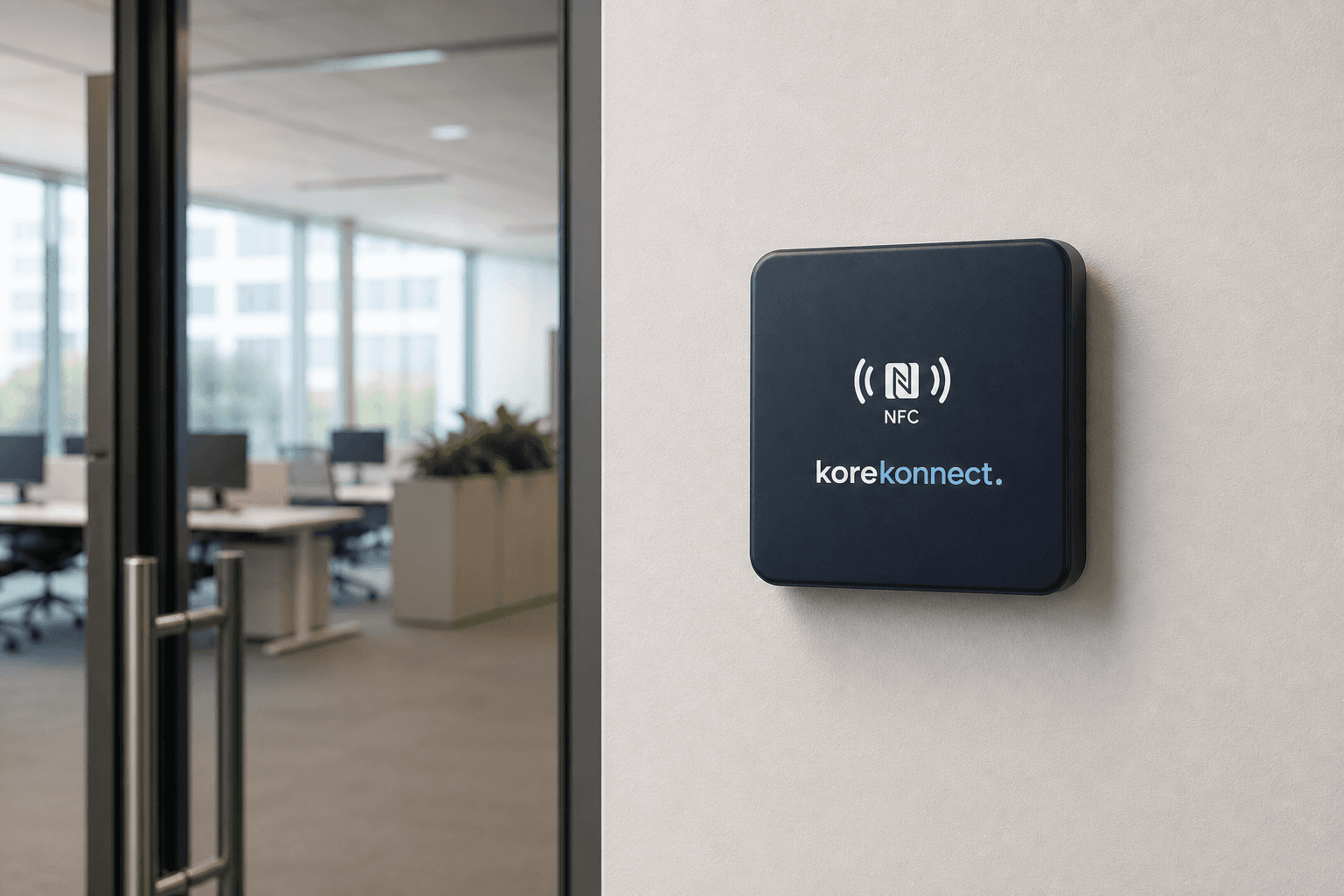
An NFC reader on the wall inverts all of it. The reader is the location proof: a tap can only happen at the door, because the chip signs each tap cryptographically. Staff tap with the phone already in their pocket — no app store, no account setup at the door, no fingerprints, no tracking. One flat price covers the whole organisation, however many teachers and volunteers pass through it.
What the record looks like when it works
Every tap lands as a timestamped in or out against a named person at a named door — the main entrance, the sisters’ entrance, the madrasah side door — in real time. The office sees who is in the building now. Month end produces payroll-ready timesheets in minutes instead of an evening of deciphering the book. And when a safeguarding question arrives, the answer is a report, not a reconstruction.
Leave and shifts sit alongside: a teacher requests time off from their phone, a manager approves it, and the timesheet already knows.
Questions committees actually ask
Do staff need to install an app?
No app store visit. Tapping the reader opens the sign-in page in the phone’s browser; staff can add it to their home screen like an app if they want, but a first-time tap works with nothing installed.
What about volunteers who come once a week?
Pricing is per organisation, not per person, so a volunteer costs nothing extra. Invite them by email, they set their own password once, and they tap like everyone else.
Can someone sign in from home?
No. A tap is only valid when a phone physically touches the reader at the door — each tap carries a one-time cryptographic signature from the chip, so a photo of the reader, a shared link or a replayed tap does not work.
Is this biometric data?
No fingerprints, no face scans, no GPS. The system records who tapped, where and when — the same facts the signing-in book always claimed to hold, recorded properly.
See it against your own doors
The live demo is a real organisation you can explore in two clicks — no signup, no sales call.
Try the live demo