Proof of presence, not surveillance
Employers need to know who was at work. Staff do not want to be tracked. Those two things are not actually in conflict — the industry just built products as if they were.
The problem with tracking-first attendance
Most modern clock-in apps solve location fraud with surveillance: GPS geofencing that watches where staff phones are, or biometric terminals that scan fingerprints and faces at the door.
Both work, and both carry costs the brochure omits. GPS tracking makes every staff phone report its position to the employer — a wedge of distrust into teams that mostly run on trust, and a standing invitation for someone to ask what else is being collected. Biometrics is heavier still: under UK GDPR fingerprints and face scans are special category data, demanding a data protection impact assessment, a strong lawful basis, and answers to fair questions from staff about where their fingerprints live. For a nursery, a charity or a masjid, that is a lot of legal weight for a signing-in sheet.
The quiet truth: the employer never needed to know where the phone was. They needed to know the person stood at the door.
Make the door the proof
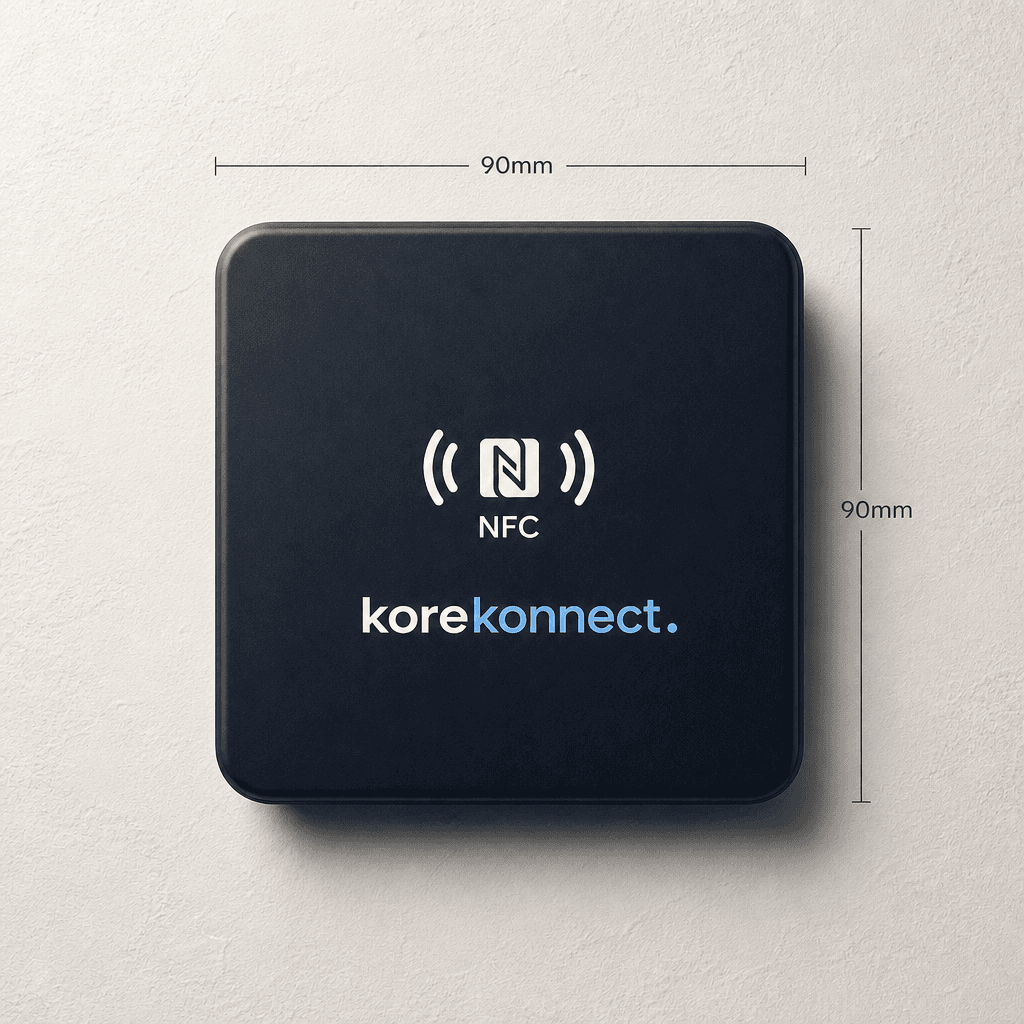
A tap-at-the-door system inverts the model. A small NFC reader is fixed by the entrance. Staff hold their phone to it; the chip inside signs that exact tap with a one-time cryptographic code, and the server verifies the signature before recording anything.
That signature is the location proof. It cannot be produced anywhere except at the reader, so there is nothing to track: no GPS, no geofence, no background app watching movement. The phone is just the key that carries the tap the ten centimetres to the door.
What gets recorded is exactly what a paper register always claimed: who, where, when, in or out. Nothing about where anyone was at any other moment of the day — because the system never knew.
Common questions
Can an employee be tracked outside work?
No. There is no GPS anywhere in the system and no background location access. A tap exists only at the moment a phone touches the reader; between taps the system knows nothing.
What stops someone tapping for a colleague?
A tap must come from the signed-in staff member’s own session on their own phone, combined with the reader’s one-time signature. Handing your phone to a colleague is the same act as handing over a signed timesheet — visible, deliberate, and attributable.
Is a tap record enough for payroll and disputes?
Each tap is cryptographically verified and timestamped server-side, with a replay guard, and every correction goes through an approval trail. That is a stronger evidential chain than a signing-in book or an honesty-based app.
Attendance staff will actually accept
One flat price per organisation. No per-head charges, no tracking to explain away.
See pricing